★★★★★5.0Google + Fresha Reviews
Fresha Highly Recommended 2025 · 2026
InMode Certified
Home · Treatments · Red Light Therapy
§ 01 · Wellness · Red Light

Red Light
Therapy.
Full-body LED.

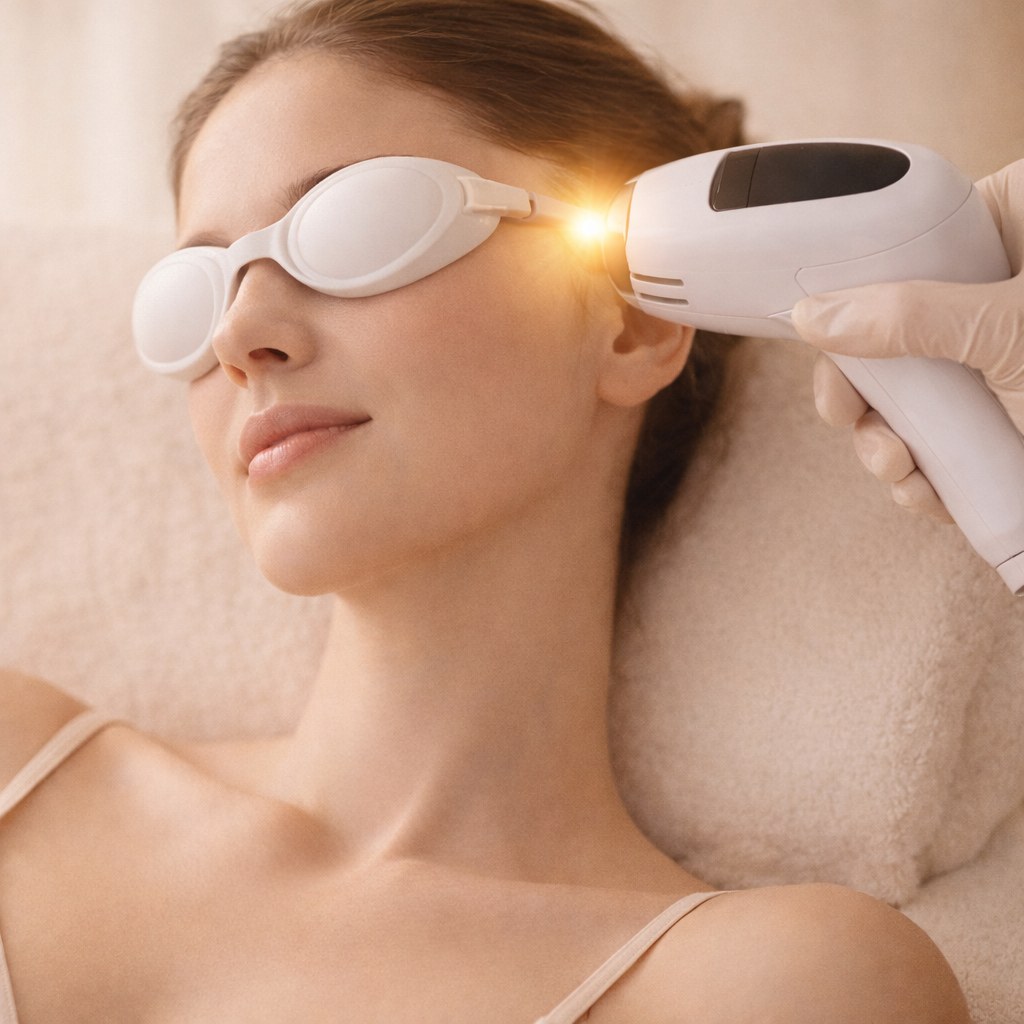
A full-body LED panel of 216 dual-chip diodes across eight wavelengths, from visible red at 630nm through near-infrared at 1060nm. No needles, no consumables, no downtime. You lie under the panel with eye protection on for up to half an hour.

From
$50Per session · course of 10 for $400
Duration
To 30 minProgrammable, set to your session
Downtime
NoneStraight back to your day
Results
GradualCumulative, best judged over a course
§ 02 · The Essentials

What red light is useful for.

Clients come to the panel for:

  • Overall skin quality and tone (the look of fine texture, a more even surface)
  • Calming redness (reactive skin that flushes easily)
  • Supporting recovery (which is why it pairs well after microneedling, laser, or a peel)
  • General wellness (some clients use it for muscle recovery and a half hour of quiet)
§ 02 · How it works

How it works.

The panel carries 216 dual-chip LEDs running eight separate wavelengths: 630, 650, 660, 670, 810, 830, 850 and 1060 nanometres. The visible red wavelengths work at the surface of the skin. The near-infrared ones travel deeper into tissue.

Each wavelength dims and pulses independently, so the panel is set for you rather than run at one fixed factory setting. The unit itself is 92cm long and rated at 360W, which is what makes a genuinely full-body session possible instead of treating one area at a time. Sessions are programmable up to 30 minutes.

What it won't do

Red light is a gentle adjunct, not a replacement for the treatments that make structural change. It won't tighten meaningful laxity, Morpheus8 does that. It won't clear pigment, Lumecca does that. It won't resurface, microneedling and peels do that. If that is what you want, we'll point you at the treatment that actually does the job and offer red light alongside it.

Good fit

This is likely for you if…

  • You want to work on overall skin quality rather than one specific flaw
  • Your skin is reactive and flushes easily
  • You've just had microneedling, laser, or a peel and want to support recovery
  • You can't take downtime and won't tolerate needles
  • You're willing to come regularly, because this builds slowly
Raise it first

Tell us before you book if…

  • You take photosensitising medication (some antibiotics, retinoids, St John's Wort)
  • You have a history of skin cancer, or an undiagnosed lesion
  • You have an active flare-up in the area
  • You have epilepsy triggered by flashing light, as the panel can pulse
  • You're pregnant

None of these are automatic disqualifiers. They're simply things your provider should know about before your first session, so we can set the panel appropriately or suggest something else.

i.

Day ofThe appointment

Skin cleansed and bare, no product left on. Eye protection on, then you lie under the panel while it runs its programme, up to 30 minutes. It's warm and quiet. Nothing touches you. You can drive, work, or wear makeup immediately afterwards.

ii.

Weeks 1–4Building

Sessions two to three times a week to start. Early on, most people notice how their skin feels and behaves more than how it looks, calmer, less reactive. Judge nothing yet.

iii.

Weeks 6–12Cumulative effect

This is where a course earns its keep. Tone and overall quality are what shift, gradually. Results vary between people, and they fade if you stop, so most clients drop to occasional maintenance sessions rather than finishing entirely.

§ 05 · Realistic pricing

What this actually costs.

Transparent per-session and typical-total pricing, no "call for a quote," no package pressure.

Per session
$50
One full-body session, up to 30 minutes on the panel.
Course of 10
$400
Works out to $40 a session, $100 less than paying as you go.
Typical course
$400
Most people start with the ten and then keep occasional single sessions going. Red light is cumulative, so a one-off won't tell you much.

Consultations are $40 + HST virtually or $50 + HST in person, applied to your treatment if you proceed. We'll quote a plan for your specific goals before any treatment begins.

Red light is set to your skin and your goals rather than run as one default programme, so whoever you see will talk it through first, and will say plainly if red light isn't the treatment that gets you where you want to go.

Torri Bennett, RPN, Lead Aesthetic Nurse Injector
Lead Aesthetic Nurse

Torri Bennett, RPN

Julia Manes, Medical Aesthetician
Medical Aesthetician

Julia Manes

Carolyn Thai, Founder and Laser Specialist
Founder · Laser & Energy

Carolyn Thai

Meet the full team →

Think in weeks, not sessions. Two to three times a week for the first month, then reassess at six to twelve weeks. Red light is gradual and cumulative. A single session is a pleasant half hour, but it won't show you what the treatment does.
Same principle, different scale. Ours is a full-body panel of 216 dual-chip LEDs running eight wavelengths that dim and pulse independently, so it's set per client rather than fixed. It treats your whole body in one session instead of your face alone. Home devices aren't useless, they're just smaller and set to one programme.
It doesn't hurt. Nothing touches your skin and there are no needles or consumables. It feels warm. You'll wear eye protection throughout. How much you undress is up to you and what you want treated, and we'll sort that out at booking.
That's one of the better uses for it, supporting recovery after microneedling, laser, or a peel. Timing depends on which treatment you had and how your skin responded, so we'll schedule it around your treatment rather than to a fixed rule.
No, and we'd rather say so upfront. If you want real tightening or pigment correction, those treatments do a job red light doesn't. Red light complements them. If someone sells it to you as a replacement, be sceptical.
A few things we'd want to know first: photosensitising medication, a history of skin cancer or an undiagnosed lesion, an active flare-up, epilepsy triggered by flashing light (the panel can pulse), and pregnancy. None are automatic disqualifiers. Raise them at your consultation and we'll work out whether it suits you.
§ 09 · Begin

Book your red light session.

Book a single session to try it, or a consultation if you'd rather map it against everything else first. We'll tell you honestly whether red light is the right tool for what you're after. No commitment.

Book Red Light